Browning and pan sauces
Find the guide for browning food, reading the fond, and building a pan sauce.
Find your next move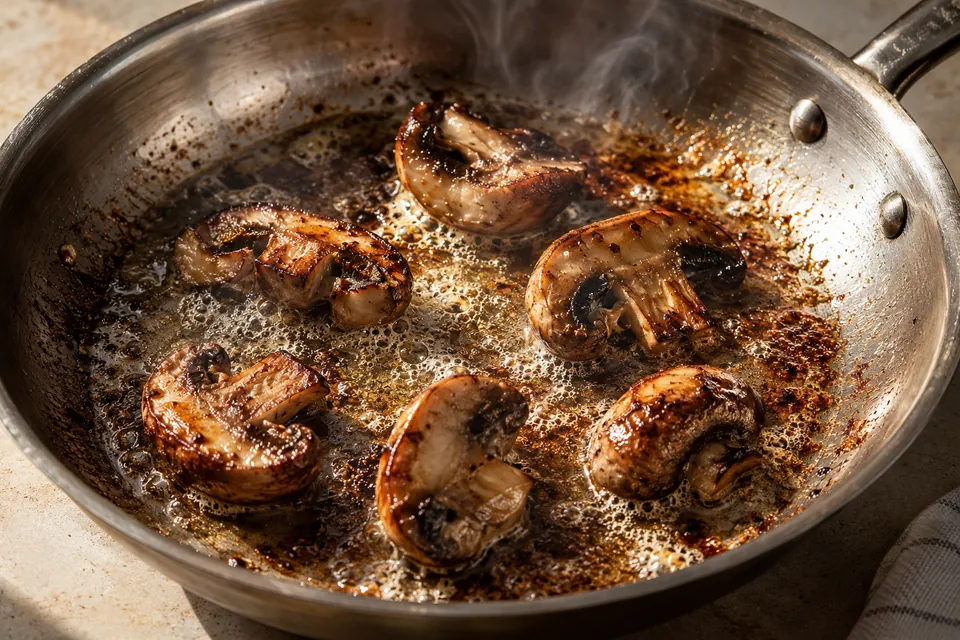
Choose what you see
Read the surface, sound, and texture.
Steaming instead of browning
Check for pooled liquid and crowded pieces before increasing heat; spread out the food or finish it in smaller batches.
Read the full guideA common causeReleased water is accumulating faster than it evaporates.
Liquid covers the bottom and bubbles around pale pieces.
Understand what is happening
- Maillard Reaction
Understand the flavor chemistry behind a brown crust, why moisture matters, and why browning has no single switch temperature.
- Heat and Moisture
Read the pan before changing the burner: contact, released water, exposed area, and evaporation explain many browning and sauce problems.
- Sauce Body
Separate flow, concentration, and fat separation. Choose a sauce texture that suits the food without turning a light jus into a failed thick sauce.
Choose a method
- Sear
Build a brown crust without treating color as internal doneness. Manage surface water, pan contact, and the heat needed to finish cooking.
- Sauté
Cook small pieces evenly while managing water release, pan space, and browning. Tossing is optional; useful contact with the pan is not.
- Deglaze
Turn usable brown pan residue into a flavorful liquid. Choose water or stock, control the steam, and leave scorched drippings behind.
- Pan Sauce
Make a sauce from browned drippings. Reduce only as far as the flavor permits, finish gently, and distinguish watery sauce from separated fat.
Choose ingredients
- Mushrooms
Prepare fresh mushrooms for browning without a no-washing myth. Manage released liquid, choose useful shapes, and keep storage guidance clear.
- Cooking Oil
Choose cooking oil by the job, its label, and the flavor you want. Manage actual smoke rather than relying on one number for every oil.
- Stock
Choose stock for sauce flavor, salt level, and possible gelatin body. Read storage guidance for the actual product rather than assuming all stocks behave alike.
- Butter
Choose whole butter for a sauce finish, account for salt, and distinguish its composition from plain oil or a different spread.
Use the right tool
- Stainless Steel Skillet
Use an uncoated skillet for visible fond and pan sauces. Choose usable cooking area and clear care instructions rather than a product ranking.
- Instant-Read Thermometer
Measure internal meat temperature independently of crust color. Place the sensor correctly, check each piece, and follow food-specific minimums.