In the kitchen
Check for pooled liquid and crowded pieces before increasing heat; spread out the food or finish it in smaller batches.
Look, listen, check
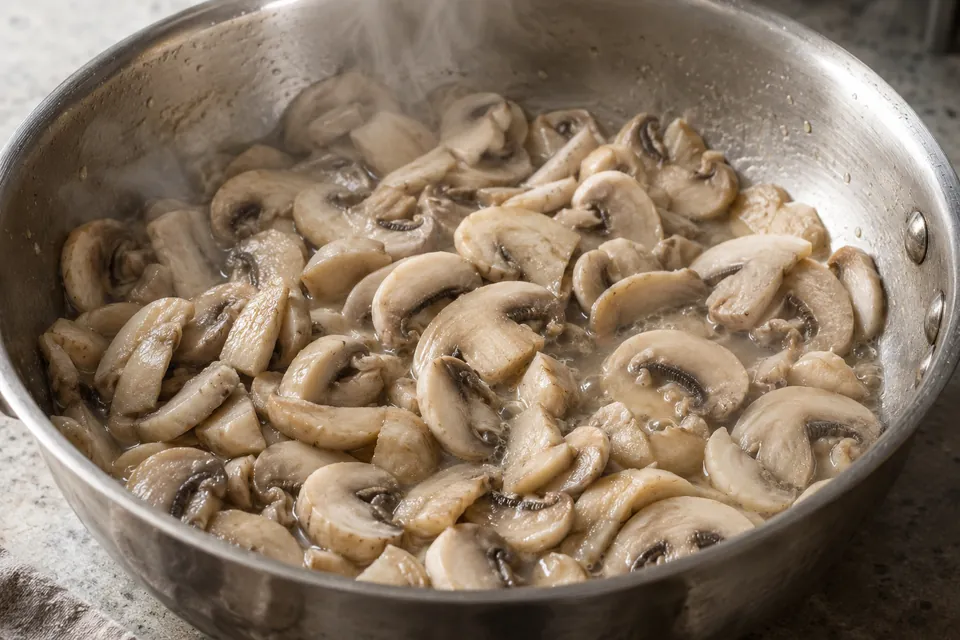
- Liquid covers the bottom and bubbles around pale pieces.
- After the liquid diminishes, contact surfaces can begin to brown.
- Scorching residue means heat is already excessive in part of the pan.
In this guide
What happened
The pan is busy, but the food stays pale. Liquid bubbles around it, or a heap of pieces keeps some of the food off the bottom. This is common with Mushrooms and large batches.
An intentional mushroom wet phase is different: America’s Test Kitchen demonstrates that sequence followed by fond development. Finish the wet stage before expecting the browning stage.
Visible vapor alone is not a diagnosis: browning food can also give off vapor. Look for pooled liquid, pale contact surfaces, and crowded pieces together.
How to fix it
- Look at the bottom. If food is stacked, spread it out or divide the batch between suitable pans. Continue cooking meat promptly rather than setting partially cooked pieces aside for later.
- If there is a puddle, leave the pan uncovered when browning is the goal. Allow liquid to diminish, checking that exposed residue is not burning.
- Once a piece has useful contact with the bottom, give it time before turning. Inspect the underside.
- Only then adjust the heat if browning remains slow. If part of the pan is scorching, redistribute the food or lower the heat instead.
- Stop pursuing color when it would overcook the food. A pale but properly cooked batch may be better served in a sauce than subjected to another long browning attempt.
For meat, verify internal temperature with a food thermometer. USDA explicitly separates safe doneness from color.
Why this happens
Evaporation consumes energy. A wet contact surface cannot behave like a dry one under the same burner setting; OpenStax explains the energy required to vaporize water. Heat and Moisture translates that principle into pan decisions.
You have several controls besides the burner: batch size, exposed area, surface water, and contact. The Maillard Reaction page explains the browning chemistry; Modernist Cuisine describes the roles of drying and temperature.
How to prevent it next time
Dry wet surfaces and begin with a batch that fits. Rinse fresh mushrooms under running water, then pat dry; FDA guidance covers produce washing and the pre-washed exception.
During Sauté, check the pan after additions instead of assuming it can accept the whole bowl. When a covered cooking stage is intentional, accept that it serves a different purpose from browning.
Related failures
Burnt Pan Drippings can occur alongside pale food when exposed patches of the pan overheat.
See also
Use Sear for sustained contact browning. Use the heat-and-moisture guide when the question is whether to wait, spread out, or change heat.