In the kitchen
Stop the heat. Finish undercooked meat promptly in suitable cookware; use a clean sauce pan if the drippings are widely scorched or acrid.
Look, listen, check
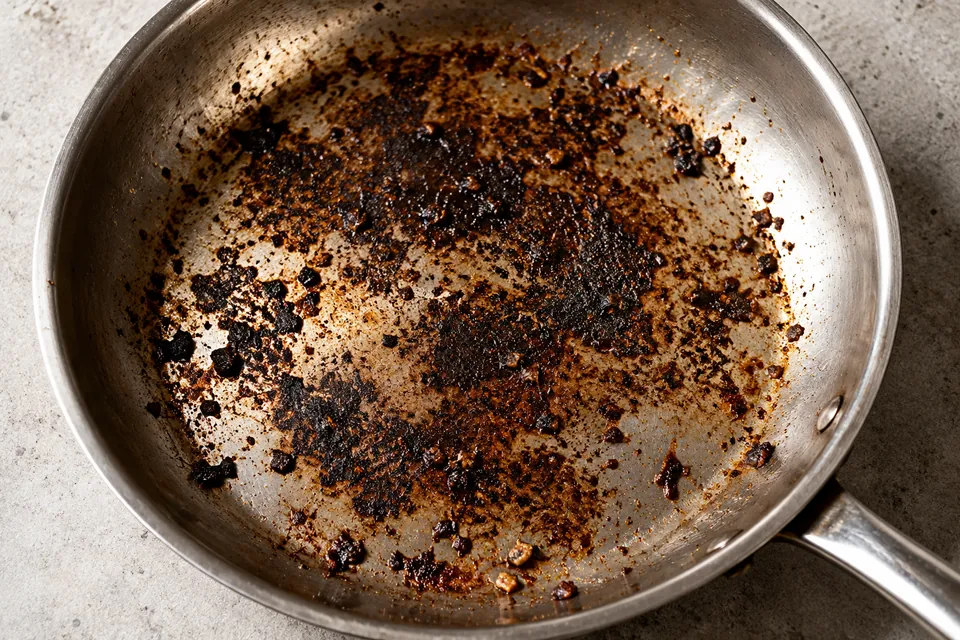
- Usable fond is brown; widespread black residue suggests scorching.
- An acrid smell is a flavor warning, not a food-safety test.
- A clean-pan sauce avoids carrying scorched residue forward.
In this guide
What happened
The residue has gone beyond the brown layer you wanted. It may be black across the bottom, smoking, or producing an acrid smell. Perhaps a few exposed patches burned while the food itself remained pale.
Color and smell help assess cooking quality here. For meat safety, FDA guidance calls for a food thermometer rather than color or texture.
How to fix it
- Take the pan off the heat. If meat is undercooked, move it to suitable cookware and continue cooking promptly. Use an Instant-Read Thermometer to confirm it reaches the applicable government minimum temperature, and complete any required rest before serving.
- Inspect the bottom. A brown layer is a different starting point from widespread blackened residue. When uncertain about scorched flavor, choose a fresh base.
- If the drippings are widely scorched or smell acrid, do not Deglaze them into the sauce. Set the pan aside to cool and make a stock-based Pan Sauce in a clean pan.
- If you already incorporated acrid drippings, replace that sauce. Butter, acid, and dilution are not reliable ways to remove the burnt material.
- Clean the cooled pan according to its instructions before another batch.
The damaged drippings themselves have no dependable rescue in this guide; that is what “no fix” means. The meal may still be usable if the food has not scorched and is cooked appropriately. A sauce without fond is an acceptable fallback.
Why this happens
Browning and burning are not interchangeable flavor goals. Modernist Cuisine distinguishes desirable browning aromas from the bitterness associated with excessive burning. This guide does not assign a universal temperature at which every ingredient burns.
Small remnants can stay against the hot pan after the main food is moved. Sugar-rich coatings and tiny aromatics introduce another reason to watch residue rather than the meat alone.
How to prevent it next time
Have deglazing liquid ready before the food leaves the pan. Lower or turn off the burner while arranging the sauce ingredients.
Between batches, reassess the residue instead of stacking fresh cooking onto a failing foundation. Brown fond is useful, as All-Clad’s fond-to-sauce guide shows; darker is not automatically better.
Use a Stainless Steel Skillet within its care limits. Manufacturer guidance cautions against leaving an empty pan on a hot burner.
Related failures
Food Is Steaming Instead of Browning can coexist with scorched exposed areas. Thin Pan Sauce describes excess water, not a reason to keep boiling acrid liquid.
See also
Sear and sautéing explain heat adjustments before the residue burns. Deglazing recovers the existing flavor; it does not repair it.