In the kitchen
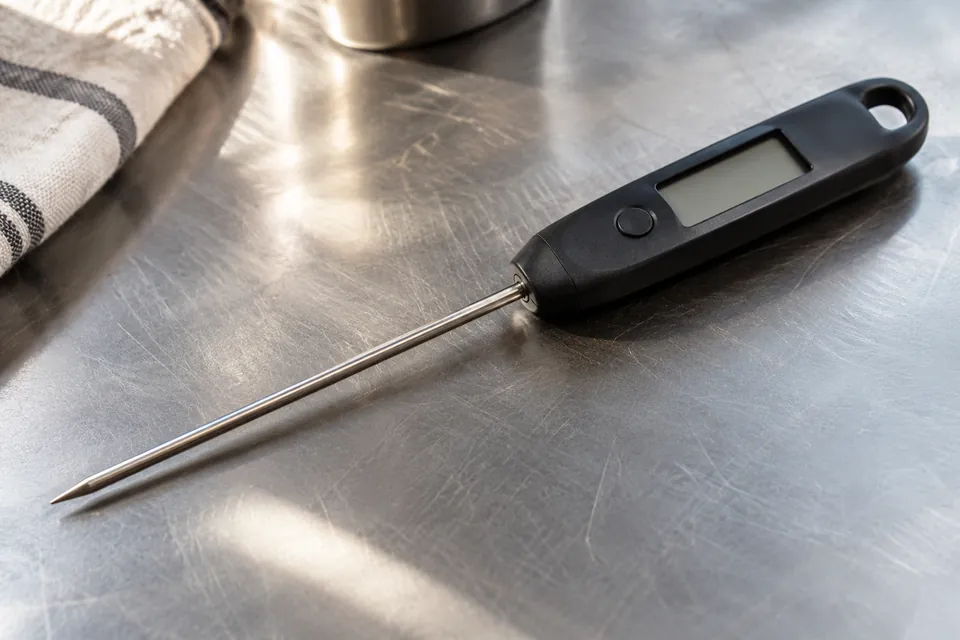
Insert the sensing area into the center of the thickest part, avoid bone and the pan, and wait for the reading to settle.
Look, listen, check
- The sensing area is in the food's interior rather than against the pan.
- Thin pieces may need a sideways insertion.
- Each piece reaches its applicable temperature; crust color is a separate observation.
In this guide
What it is
An instant-read food thermometer measures temperature where its sensor sits. Read its instructions for the sensing area’s location and required insertion depth.
It answers a different question from browning: whether the interior has reached the applicable temperature.
What it’s good at
During Sear or Sauté, check meat independently of the crust. USDA guidance says color is not a reliable safety indicator.
Insert into the thickest part, away from bone, fat, and gristle. For a thin piece, insert through the side toward the center; USDA’s placement guidance explains this. Keep the sensor away from the pan and check each piece. Wait as directed for the reading to settle.
For the meat examples in this cluster, USDA’s consumer minimums are:
| Food | Minimum internal temperature |
|---|---|
| Beef, pork, veal, or lamb steaks and chops | 145°F / 63°C, followed by at least 3 minutes’ rest |
| Ground beef, pork, veal, or lamb | 160°F / 71°C |
| Poultry, including ground poultry | 165°F / 74°C |
The accessible government temperature chart gives additional foods and exceptions. Do not transfer a whole-cut temperature to ground meat.
What it’s bad at
A poorly placed sensor can produce a misleading reading. A device whose sensing area will not fit inside a thin piece needs a different placement or a suitable finer probe.
An instant-read model is not automatically suitable for leaving in an oven or hot pan. Check its instructions.
Buying guidance
Prioritize a sensing area suited to the food, readable numbers, and clear accuracy and care instructions.
Related equipment
A Stainless Steel Skillet manages the surface. The thermometer checks inside. Food Is Steaming Instead of Browning may explain a pale crust, but cannot decide meat safety.
Techniques that use this
Use it while finishing seared or sautéed meat. Wash the probe after use according to its instructions; USDA cautions that many thermometers should not be immersed. Check accuracy using the manufacturer’s procedure rather than assuming “instant” means infallible.