In the kitchen
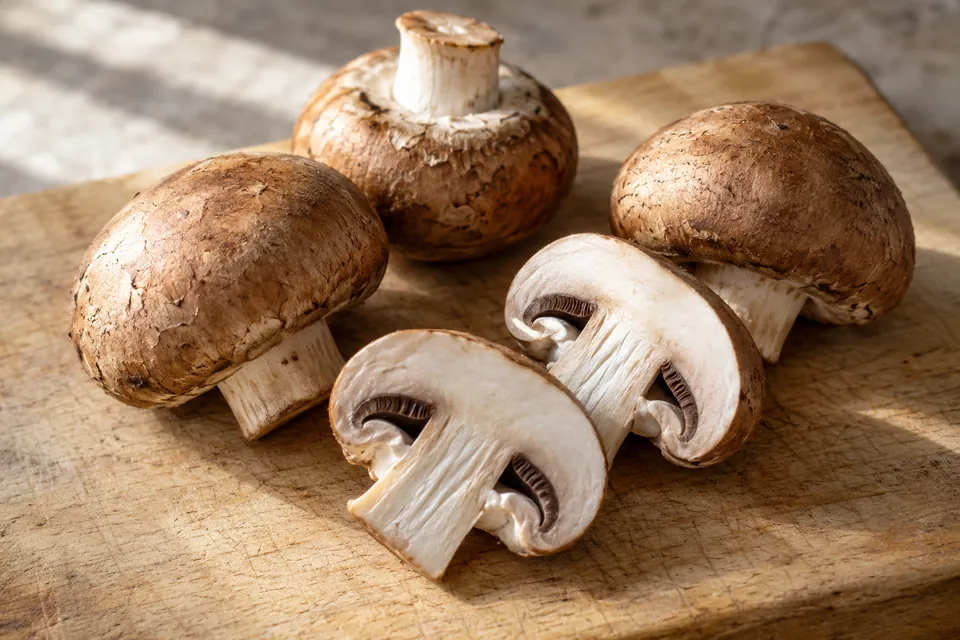
Rinse fresh mushrooms under running water, pat dry, and cut to a shape that gives the pan useful contact.
Look, listen, check
- Firm, plump mushrooms are a useful buying cue.
- A puddle during cooking calls for a moisture check rather than immediate extra oil.
- Brown patches show surface development, not a guarantee about safety or tenderness.
In this guide
What mushrooms are
Mushrooms are fungi, although they sit with vegetables in many kitchens. This guide concerns commercially sold edible mushrooms, not identification of wild specimens.
Choose the cut for the result: broad slices expose a face for browning, while small pieces work well in a filling or sauce.
How to buy and store
Choose firm, plump mushrooms rather than dried-out specimens; the Mushroom Council describes these quality cues and storage in original packaging or a porous paper bag.
For safety, FDA guidance names mushrooms among perishable produce to refrigerate at 40°F / 4°C or below. Discard rotten produce. Appearance alone cannot prove freedom from pathogens.
Functional role in techniques
Rinse fresh mushrooms under running water and pat dry before cooking; washing is not forbidden. FDA recommends washing produce, while the Mushroom Council supports a brief rinse. Produce labeled pre-washed or ready-to-eat can be used without another wash under the FDA guidance.
Use Sauté for smaller pieces and Sear for a broad browned face. Released liquid can collect during cooking; watch the pan before adding more fat.
An intentional wet phase can precede browning. America’s Test Kitchen’s demonstration salts mushrooms during that stage, then evaporates the liquid to develop fond. Early salt does not rule out later browning; follow the method’s sequence rather than a universal salting prohibition.
Mushrooms also belong in a Pan Sauce. You can keep some of their liquid for that purpose rather than treating every drop as a mistake.
Common failures and diagnostics
For pale mushrooms sitting in liquid, use Food Is Steaming Instead of Browning. If exposed residue is blackening while the batch remains wet, consult Burnt Pan Drippings.
Avoid choosing a fixed minute count for all varieties, cuts, and batch sizes. Check the texture you want as well as the surface.
Substitutions
| Choice | What to reconsider |
|---|---|
| Another fresh edible variety | Shape, tenderness, and how much room the batch needs |
| Dried mushrooms | Follow the package’s preparation directions; do not treat the dry weight as a direct fresh-mushroom swap |
Notes on safety
Use clean hands and utensils. FDA advises plain running water rather than soap or detergent for produce; washing reduces contamination but does not eliminate it. Keep ready-to-eat mushrooms separate from raw meat and its utensils.