In the kitchen
Cut pieces evenly, leave room in the pan, and pause stirring when you want a browned face.
Look, listen, check
- Pieces cook at a similar pace because their sizes are similar.
- Pooled liquid diminishes before strong surface browning develops.
- Tenderness and desired surface color are separate checks from meat safety.
In this guide
Start here
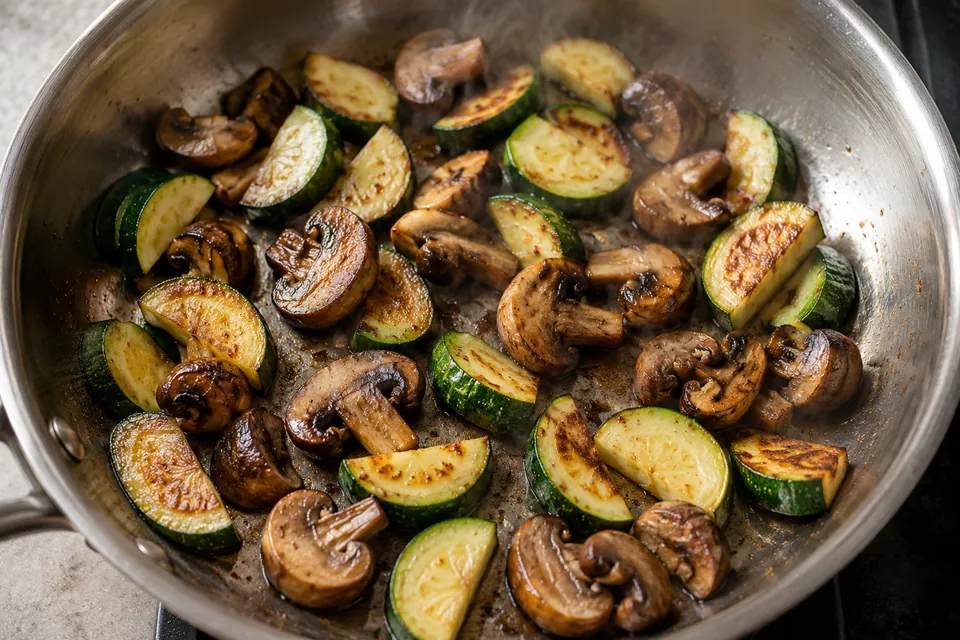
For browning right away, plan the batch around the pan’s usable cooking area. The method below starts with fat and dry surfaces. An intentional wet-first mushroom method is another route: America’s Test Kitchen demonstrates cooking off the liquid before developing fond.
Method
- Prepare pieces of similar size. Rinse fresh Mushrooms under running water and pat dry, unless labeled pre-washed or ready-to-eat. FDA produce guidance covers that exception; the Mushroom Council supports a brief rinse.
- Warm the pan according to its instructions. Add enough Cooking Oil to leave a light film over the cooking area.
- Add a manageable batch. Spread it out, then inspect what happens: are pieces contacting the bottom, or sitting above others?
- Stir or turn to expose uncooked surfaces. When browning matters, allow periods of contact between turns rather than keeping everything in constant motion.
- Check texture and color separately. Remove finished pieces as needed. If cooking meat, verify each piece’s safe internal temperature rather than choosing one representative piece.
A spoon or spatula works; tossing the pan is optional. The pan-handling approach follows All-Clad’s cooking guidance, with adjustments based on what the food does.
What’s actually happening
Water can leave the food faster than it leaves the pan. Evaporation takes energy, as explained in OpenStax’s treatment of phase changes. With persistent pooled liquid, the lower surfaces cook in that liquid while exposed areas behave differently. See Heat and Moisture for the practical controls.
Browning may be useful, but sautéing does not require every ingredient to become dark brown.
When to use it
Use this method for small, reasonably even pieces that can finish on the stovetop. Cook ingredients separately when one needs prolonged softening and another needs only brief heating. Add delicate aromatics later if they scorch while the main ingredient is still cooking.
Sensory cues for done
For mushrooms, look for the texture you want and brown patches if browning is the goal. For vegetables, check a piece for tenderness. For meat, use an Instant-Read Thermometer; USDA cautions against judging safety by color.
Common failure modes
A puddle and pale surfaces point to Food Is Steaming Instead of Browning. Tearing during a turn belongs to Food Stuck to Pan. Darkening residue deserves attention before it becomes Burnt Pan Drippings.
Equipment
A Stainless Steel Skillet makes the residue visible. Use a utensil suited to the pan; do not use metal tools on a coating whose instructions prohibit them.
Related techniques
Sear emphasizes a sustained browned face. Deglaze follows sautéing when usable fond remains; Pan Sauce turns that liquid into an accompaniment.
Example applications
Sauté mushrooms for toast, cook diced vegetables for a filling, or cook small meat pieces before finishing a sauce. Separate batches can be combined at the end.