In the kitchen
Use a light film of an oil suitable for your cooking method; lower the heat if it begins smoking continuously.
Look, listen, check
- The working surface has a film of oil rather than dry gaps.
- Continuous smoke means reassess heat; it is not a required readiness cue.
- A large free-fat layer needs a different response from watery sauce.
In this guide
What cooking oil is
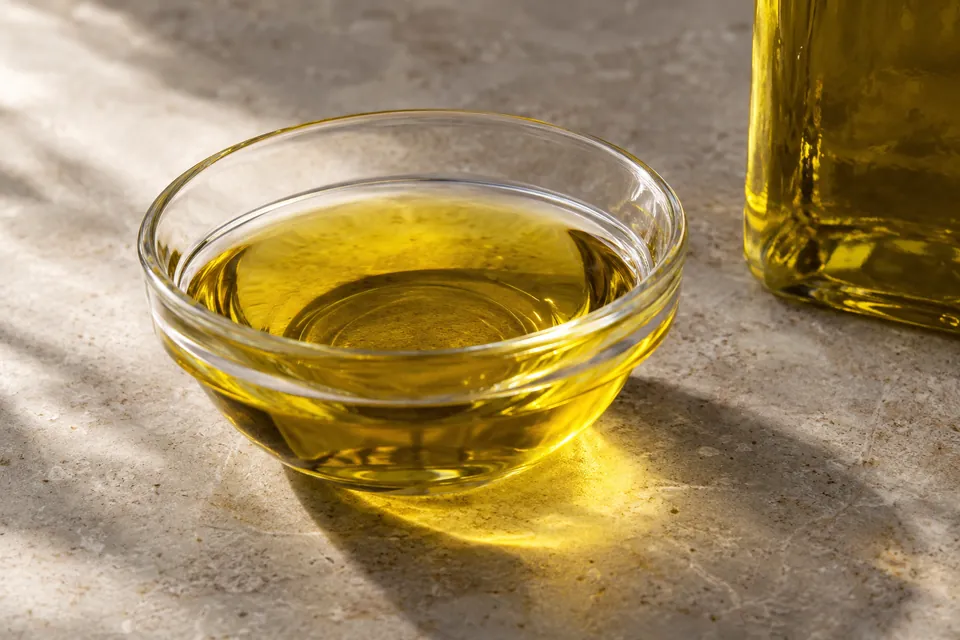
Cooking oil is edible fat that stays liquid under typical kitchen conditions. In this collection, it coats a cooking surface or supplies the fat in a vinaigrette, while contributing the flavor of the oil chosen.
Begin with the cooking method and the bottle’s guidance. A familiar neutral-flavored oil can suit a dish where you do not want a strong oil flavor; olive oil can suit a dish where you do.
How to buy and store
Do not assume extra virgin olive oil is forbidden for cooking. UC Davis explains that its smoke point varies with grade, quality, and freshness. Nor does “refined” give every bottle the same behavior.
Buy a quantity you will use while fresh. For olive and avocado oils, UC Davis storage guidance recommends a closed bottle in a cool, dark cabinet away from the stove.
Functional role in techniques
For Sear or Sauté, spread a light film across the working surface, then observe the food. Add more only when uncovered areas need it; oil is not the answer to a panful of water.
If the oil smokes continuously, lower the heat or remove the pan from the burner. Do not make smoking a prerequisite for adding food. Follow your pan’s instructions; All-Clad’s stainless guidance begins with moderate preheating.
For Vinaigrette, choose an oil whose flavor suits the dish and use the dressing’s mixing method. Emulsions explains why a separated dressing needs a different decision from a pan with insufficient oil coverage.
Common failures and diagnostics
Food Is Steaming Instead of Browning asks about liquid and space. Burnt Pan Drippings asks about scorched flavor. These are different from insufficient fat coverage.
Before making a Pan Sauce, pour off excess free fat carefully. The finishing step is not the same as leaving a large oily layer in the pan; see the deglazing reference.
Substitutions
| Need | Useful choice |
|---|---|
| Little added oil flavor | An edible neutral-flavored oil labeled for the intended method |
| Olive flavor | Olive oil suited to the method; manage the heat rather than using a universal prohibition |
Notes on safety
An oil’s grade does not establish a suitable temperature for every pan. Follow the cookware’s heat limits, and reassess the burner when oil smokes continuously. Keep the bottle away from the hot cooking surface while you add oil.