Sauces and dressings
Find the guide for butter finishing, dressing separation, and sauce texture.
Find your next move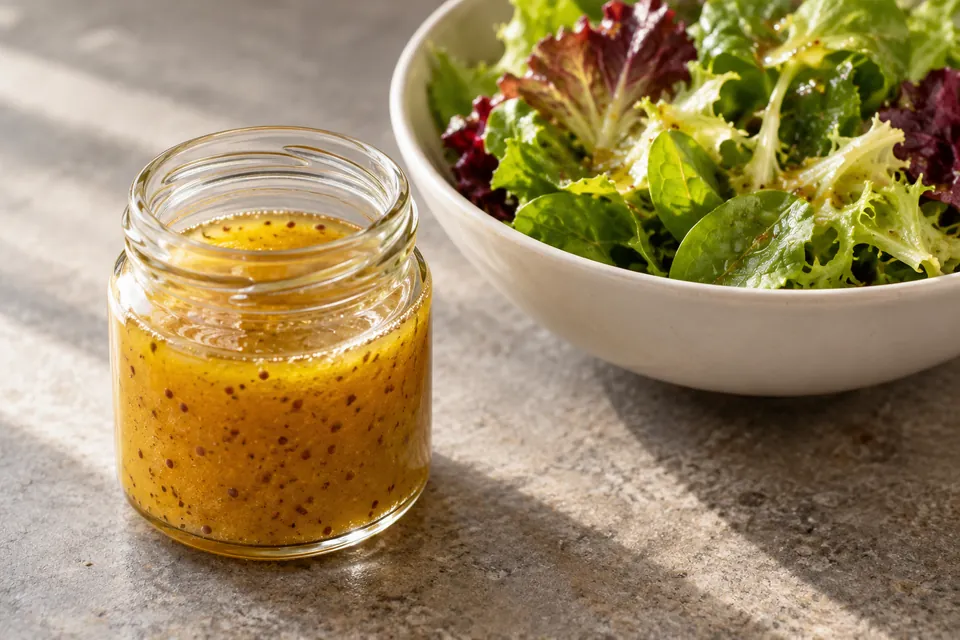
Choose what you see
Read the layers and flow.
Oil pools on the sauce
Stop adding butter and take the pan off heat. For a water-based butter finish, stir in a teaspoon of water and reassess before adding more.
Read the full guideA common causeToo little water remains for this butter finish.
Free oil gathers above the liquid; this differs from a cohesive light jus.
Understand what is happening
- Emulsions
Understand dispersed fat, ordinary separation, and why a cohesive sauce can still be thin. Match the next action to the sauce you actually have.
- Sauce Body
Separate flow, concentration, and fat separation. Choose a sauce texture that suits the food without turning a light jus into a failed thick sauce.
- Heat and Moisture
Read the pan before changing the burner: contact, released water, exposed area, and evaporation explain many browning and sauce problems.
Choose a method
- Vinaigrette
Make a dressing that mixes well enough for its job. Balance flavor on the food and choose a temporary or mustard-assisted emulsion.
- Finish a Sauce with Butter
Finish a flavorful liquid with butter without chasing thickness or boiling away its water. Watch cohesion, flow, and seasoning together.
- Pan Sauce
Make a sauce from browned drippings. Reduce only as far as the flavor permits, finish gently, and distinguish watery sauce from separated fat.
Choose ingredients
- Butter
Choose whole butter for a sauce finish, account for salt, and distinguish its composition from plain oil or a different spread.
- Mustard
Use prepared mustard for flavor and vinaigrette stability without assuming seed, powder, and every jar perform alike.
- Stock
Choose stock for sauce flavor, salt level, and possible gelatin body. Read storage guidance for the actual product rather than assuming all stocks behave alike.
- Cooking Oil
Choose cooking oil by the job, its label, and the flavor you want. Manage actual smoke rather than relying on one number for every oil.