In the kitchen
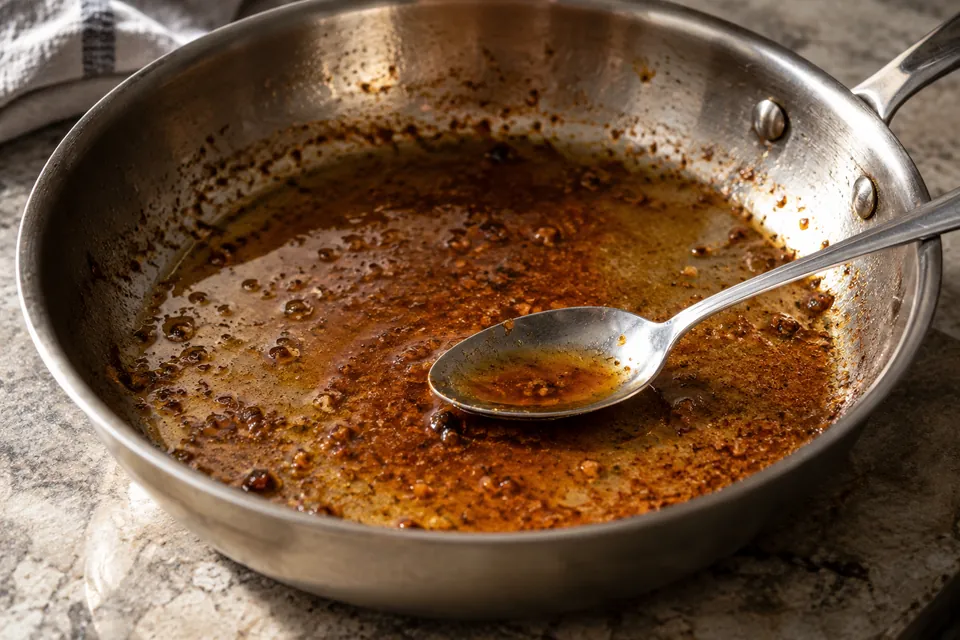
Inspect the drippings, deglaze with water or stock, and check flavor before reducing for thickness.
Look, listen, check
- The fond releases into the liquid.
- The sauce tastes concentrated enough before seasoning is finalized.
- A butter finish looks cohesive rather than leaving a separate oily layer.
In this guide
Start here
Cook the main food first, then build the sauce. Decide whether you want a light pouring jus or a sauce that coats a spoon. Thin is not automatically wrong.
Have water or stock ready before removing the food and finish the sauce promptly. If service is delayed, USDA holding guidance calls for keeping hot food at or above 140°F / 60°C. Do not leave cooked meat on the counter while pursuing a long reduction; serving a lighter jus is an option.
Method
- Inspect the drippings. Keep usable brown fond; follow Burnt Pan Drippings if the pan is widely blackened or smells acrid.
- Pour off excess free fat carefully and lower the heat. If the pan is smoking heavily, take it off the burner and let the smoking subside. Deglaze with a splash of water or stock, keeping clear of the steam, then scrape gently.
- Add enough liquid for the sauce you need. Simmer and check it often as the volume falls.
- Before pursuing thickness, taste the cooked sauce. Stop reducing if it is becoming too salty or intense. A light jus is preferable to an over-concentrated coating sauce.
- If desired, take the pan off the heat and stir in small pieces of cold butter gradually. Finish a Sauce with Butter gives the fuller method. Stop when the finish suits the dish; butter is optional.
- Adjust seasoning at the end and serve promptly.
The fond-to-sauce approach is shown in All-Clad’s After the Sear; its deglazing guide also describes finishing off heat with butter.
What’s actually happening
Evaporation reduces the sauce’s water volume. Salt becomes more concentrated, as Illinois Physics Van explains; this is one reason to check seasoning before pursuing thickness. Heat and Moisture explains why reduction changes both volume and flavor. Butter finishing disperses fat through the liquid, changing texture; a separated oily layer is a different problem from excess water.
Stock composition affects the result: ChefSteps’ pan-sauce explanation identifies gelatin as one contributor to body. Reducing any liquid by the same fraction will not guarantee the same thickness. Sauce Body separates that texture question from the cohesion explained in Emulsions.
When to use it
Use a pan sauce after Sear or Sauté, including browned Mushrooms. When there is little fond, use stock for a sauce with a different foundation. When the drippings are scorched, begin in a clean pan rather than incorporating them.
A sauce does not make undercooked meat safe.
Sensory cues for done
Check a spoonful after cooling it enough to taste. Judge flavor and flow together. A sauce may tighten as it cools, so stop reducing while it still flows freely in the hot pan.
Common failure modes
Thin Pan Sauce distinguishes a useful reduction from one that will over-season the sauce. If butter leaves visible oil, stop adding it and remove the pan from heat; Butter-Finished Sauce Is Oily gives the bounded rescue. Do not treat the oily layer as water that needs boiling away. A cohesive sauce that has tightened too far belongs in Sauce Is Too Thick.
Equipment
A Stainless Steel Skillet allows a view of the residue. Use a heat-safe utensil and protect your hand from the handle.
Related techniques
Deglazing is the recovery step, while searing and sautéing supply the initial browned flavor.
Example applications
Serve a mushroom jus over toast or a stock-based sauce with cooked cutlets. For leftovers, government guidance calls for prompt refrigeration; USDA advises bringing reheated sauces to a boil. A fresh butter finish can follow that reheating step.
Sources
- All-Clad: After the Sear
- All-Clad: Master the Art of Pan Deglazing
- USDA FSIS: Safe Methods of Reheating Food
- FoodSafety.gov: Four Steps to Food Safety
- ChefSteps: Instant Red Wine Pan Sauce (public recipe introduction)
- USDA FSIS: Danger Zone and Hot Holding
- University of Illinois Physics Van: Does Salt Evaporate?