In the kitchen
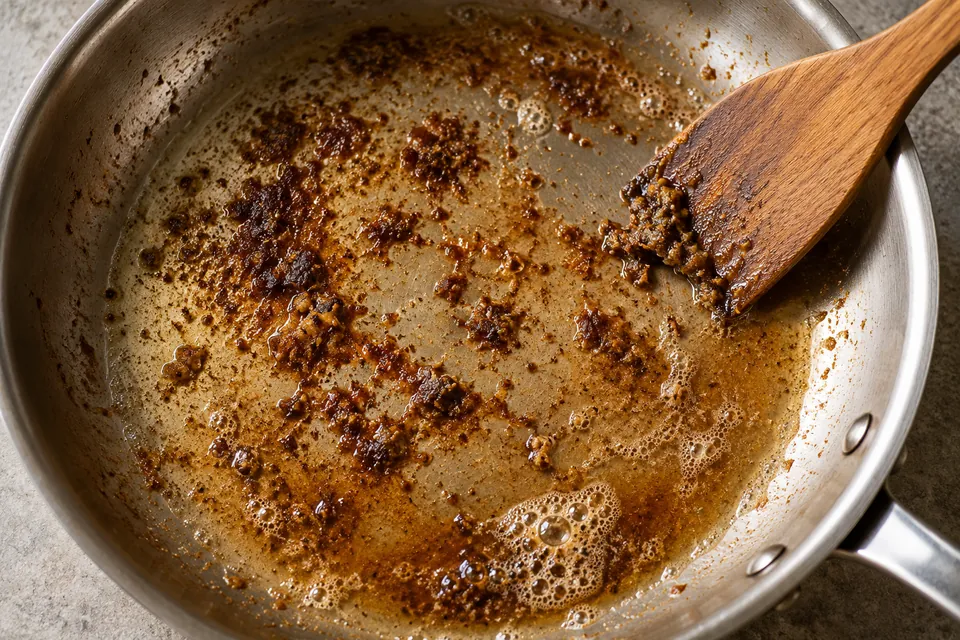
Remove cooked food, inspect the residue, and add liquid only if the drippings are usable.
Look, listen, check
- Brown residue loosens under gentle scraping.
- The liquid picks up color while the bottom becomes easier to see.
- Widespread blackened residue or an acrid smell calls for a fresh sauce base.
In this guide
Start here
Inspect the pan before pouring anything in. Brown stuck-on residue is a potential sauce base. Widespread blackened residue or an acrid smell is a reason to stop and use a clean pan.
Deglazing releases what is already there. It does not turn scorched flavor into good fond.
Method
- Remove cooked food. If meat still needs cooking, continue cooking it promptly; sauce-making should not delay that job. Use an Instant-Read Thermometer while finishing to confirm it reaches the applicable government minimum temperature, and complete any required rest before serving.
- Pour off excess free fat carefully into a heatproof container. Leave the browned residue.
- Lower the heat. If the pan is smoking heavily, take it off the burner and let the smoking subside.
- Add a small splash of water or stock, keeping your face and hands away from the steam. Pour from a vessel rather than leaning over the pan.
- Scrape gently with a suitable utensil. Add more liquid if the bottom dries before the residue releases.
- Once the residue is loosened, decide whether to keep the liquid as a light jus or continue to Pan Sauce.
Water is a valid option: All-Clad’s deglazing guidance describes using it as well as stock or wine. Wine is a flavor choice, not a requirement. This guide uses water or stock so alcohol reduction and open-flame handling are not prerequisites.
What’s actually happening
Liquid loosens and carries browned material into the sauce. Fond contains products of the Maillard Reaction and other changes during cooking. You are recovering flavor already developed, not making a new crust in the liquid. All-Clad’s After the Sear demonstrates this connection between residue and sauce.
When to use it
Deglaze after Sear or Sauté when there is useful residue. With very little fond, stock may provide most of the flavor. That is a workable sauce, but not proof that the missing fond was recovered.
Do not include blackened debris to make the liquid look darker. See Burnt Pan Drippings for the restart decision.
Sensory cues for done
The pan bottom becomes visible and the residue stops resisting gentle scraping. Color shows that material entered the liquid; it does not establish safe doneness of any meat served with it.
Common failure modes
If the splash vanishes before you can scrape, reduce heat or add more liquid. If the resulting sauce is watery, Thin Pan Sauce helps you decide whether further reduction is useful.
Equipment
A Stainless Steel Skillet tolerates many sauce ingredients, but follow the specific pan’s care instructions. Avoid flooding a very hot pan with cold liquid; All-Clad’s care guidance addresses thermal shock during cleaning.
Related techniques
Searing and sautéing create the residue. Deglazing recovers it. A pan sauce adds concentration and finishing decisions.
Example applications
Recover mushroom fond with water for a quick accompaniment, or use stock after cooking cutlets. The same technique also loosens residue for cleaning after the pan has cooled appropriately.