In the kitchen
Stop adding butter and take the pan off heat. For a water-based butter finish, stir in a teaspoon of water and reassess before adding more.
Look, listen, check
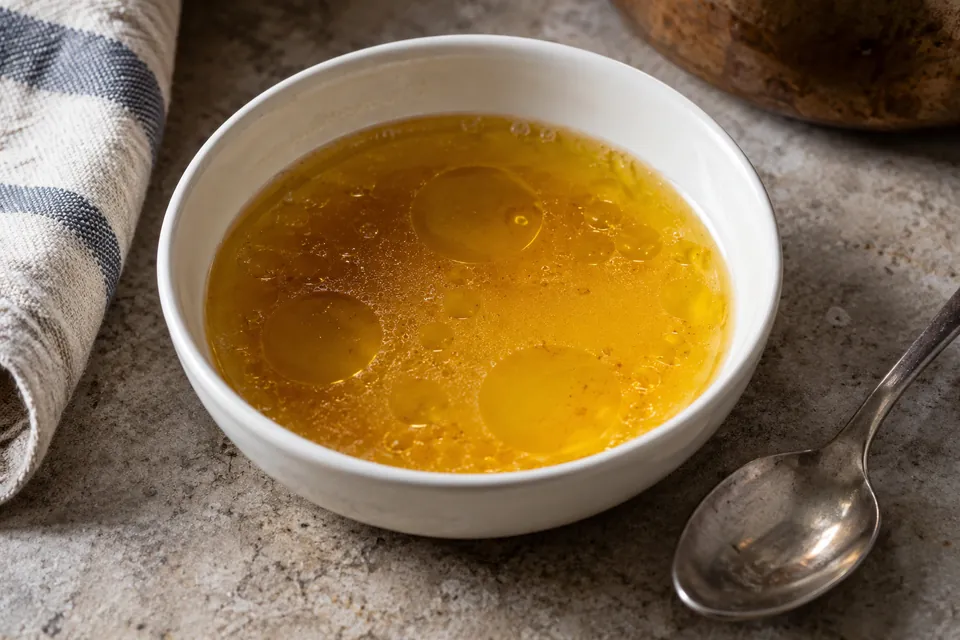
- Free oil gathers above the liquid; this differs from a cohesive light jus.
- Small solid butter pieces may simply need gentle warming.
- A less visible oil layer is improvement, not a promise of lasting stability.
In this guide
What happened
Butter melts, but oil gathers separately instead of becoming part of the liquid. This guide concerns butter-finished water-based sauces, including a stock-based Pan Sauce. It does not cover egg sauces, mayonnaise, curdled dairy, or cheese sauces.
Cold butter pieces are another observation: solid pieces that have not melted are not proof of separation. A cohesive sauce that pours freely is also different; it may be a finished light jus.
How to fix it
- Stop adding Butter and take the pan off heat. Inspect for a liquid oil layer rather than solid pieces.
- If the cooked base tastes sound, stir or whisk in a teaspoon of water. Watch whether the slick diminishes as the liquid mixes.
- If it improves but still needs liquid, repeat in a small increment. Taste after cooling a spoonful enough to taste; water changes intensity as well as flow.
- If the sauce has cooled too far to mix properly, warm it gently while stirring. Keep checking liquid volume rather than repeatedly boiling it down.
- If it still separates or flavor no longer suits the dish, stop trying to force the finish. Make a fresh modest sauce or serve another accompaniment.
Sohla El-Waylly’s pan-sauce guide supports water and agitation for a sauce separated after over-reduction. It is an option to try, not a guarantee for every composition.
A widely scorched or acrid base belongs in Burnt Pan Drippings instead. Texture improvement does not repair that flavor.
Worked example
A small mushroom sauce begins shedding oil after you simmer it again. Pause heating and add one teaspoon of water while stirring. If it becomes more even and still tastes good, stop there and serve. If the slick remains, reassess before adding another teaspoon or more butter.
The example illustrates a checkpoint, not a tested Fondwork recovery rate.
Why this happens
A butter finish disperses fat through a watery base. Serious Eats’ pan-sauce explanation discusses insufficient liquid as a cause of separation. Extra boiling can worsen that shortage.
Some stock-based sauces emulsify during bubbling. Do not turn this into a rule that any boil inevitably breaks every butter sauce. Emulsions explains the distinction; Sauce Body separates stability from thickness.
How to prevent it next time
Pour off excess free cooking fat before building a pan sauce. Finish near service, using small additions; All-Clad’s method offers an off-heat approach that limits further reduction.
Related failures
Thin Pan Sauce asks whether concentration is desirable. Sauce Is Too Thick concerns a cohesive mixture with the wrong flow.
See also
Finish a Sauce with Butter gives the method and its limits. Starting with a small, flavorful base is easier to assess than chasing thickness with repeated butter additions.