In the kitchen
Stop reduction. Check a spoonful near eating temperature; if it is still too thick, mix in a little water or suitable unsalted stock and reassess.
Look, listen, check
- A cohesive sauce falls in a mound or drags instead of flowing as wanted.
- Cooling can change flow without creating a separate oil layer.
- A light jus is allowed to pour freely.
In this guide
What happened
The sauce is mixed together but no longer flows as intended. This guide covers the stock-based sauces, butter finishes, and vinaigrettes in this collection. It does not give a universal repair for lumpy starch sauces, curdled dairy, cheese, or egg sauces.
First choose the intended result. A coating sauce need not pour like water, and a light jus need not coat a spoon.
How to fix it
- Stop reducing. Check a spoonful near eating temperature, after cooling enough to taste.
- If a freshly made stock sauce has merely cooled below its intended warm serving temperature, warm it gently and check again before diluting it.
- For a cohesive sauce that remains too thick, add a small amount of compatible liquid. Try a teaspoon of water in a small sauce portion; warm water suits a warm stock sauce, while room-temperature water suits a cold vinaigrette.
- Mix fully and recheck flow. Add another small increment only if needed. Suitable unsalted Stock is another option for a stock-based sauce whose flavor you want to retain.
- Taste again and adjust seasoning cautiously. Stop when the texture suits the food; do not dilute until flavor disappears.
This is a small-step adjustment, not a fixed dilution ratio for every sauce.
Worked example
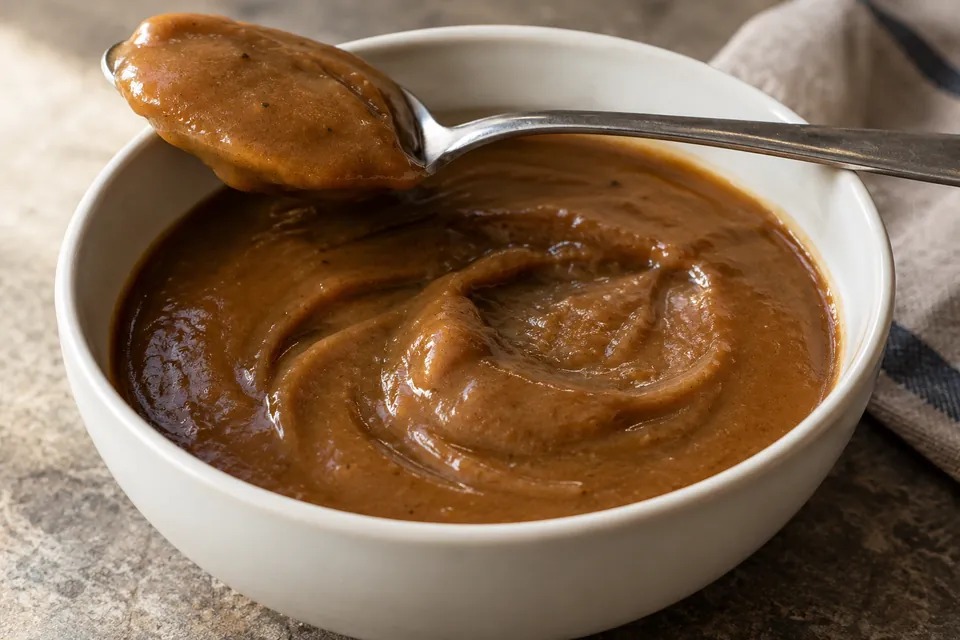
You have about 4 tablespoons of concentrated mushroom sauce that drags across the plate. Test 1 teaspoon of warm water in half of it. If that portion flows better and still tastes right, use similarly small additions to adjust the remainder.
If an oil slick appears instead, move to Butter-Finished Sauce Is Oily. More thickness adjustment is not automatically the answer.
Why this happens
Evaporation lowers water volume; OpenStax explains that mechanism. Salt remains as water evaporates, as Illinois Physics Van describes. Loosening an over-concentrated sauce changes intensity along with texture.
Temperature also matters. UCLA’s gelatin discussion describes a gel that can melt on warming. The hot pan and the plate may therefore show different flow. Sauce Body helps distinguish concentration, ingredients, and temperature.
How to prevent it next time
Check the sauce frequently as volume falls and judge a cooled spoonful before the last reduction. Finish Pan Sauce and Finish a Sauce with Butter near service rather than repeatedly reheating and reducing for thickness.
For previously cooked leftover sauce, gentle warming is not the entire reheating instruction: FDA guidance calls for bringing sauces to a boil when reheating. Check texture afterward and make a fresh butter finish if desired.
Related failures
Thin Pan Sauce is the opposite flow question, with the same need to taste before further concentration.
See also
Sauce Body gives the mechanism. Stock helps choose a base whose flavor and body suit the job.