In the kitchen
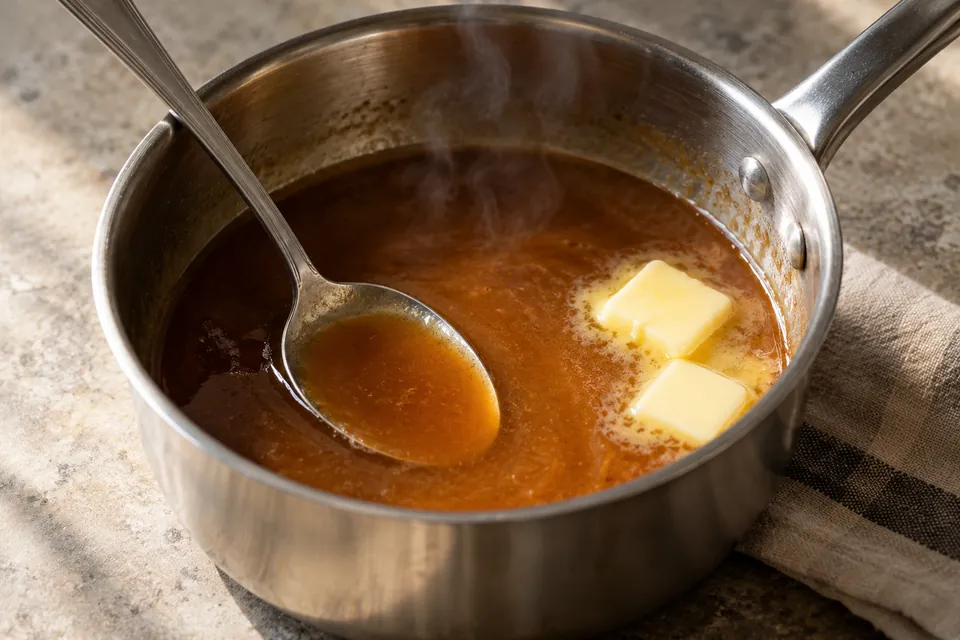
Taste the cooked liquid first, take it off the heat, and stir in small cold butter pieces; pause if a separate oily layer appears.
Look, listen, check
- The butter melts into the liquid rather than collecting as a slick.
- The finished sauce still flows at serving temperature.
- A light pouring sauce can be complete without coating a spoon.
In this guide
Start here
Begin with a cooked liquid that tastes worth finishing. Butter can enrich it; it cannot reliably disguise Burnt Pan Drippings or remove excess salt. Use a small amount of whole Butter, not a large addition intended to fix a panful of unwanted liquid.
For a Pan Sauce, recover usable fond and adjust the liquid before finishing. You can also finish stock-based liquid made in a clean pan.
Method
- Taste a spoonful after cooling it enough to taste. If the base needs concentration, do that first; stop if flavor or salt is already strong enough.
- Take the pan off the burner. The liquid should remain warm enough to melt butter, with some liquid still present.
- Stir or whisk in a small cold butter piece. Let it melt and disperse before deciding on another.
- Watch for free oil. If a slick grows, stop adding butter and follow Butter-Finished Sauce Is Oily.
- Check flow and flavor, then serve promptly. Do not keep reducing a finished sauce just to force a thicker texture.
All-Clad’s butter-finishing section describes gradual cold butter additions off heat. ICE’s sauce lesson also turns off heat before its finishing addition to prevent further reduction. Off heat is a practical way to control the process, not a universal chemical requirement.
If the liquid cools before a piece melts, warm it gently while stirring, then reassess. Cold solid pieces and a separate liquid-fat layer are different observations.
Worked example
After sautéing mushrooms, Deglaze sound brown residue with water. Suppose you have about 4 tablespoons of flavorful cooked liquid left. Take it off heat and stir in a small butter piece, about 5 grams, then check cohesion and taste.
Add another small piece only if you want a richer result. If the sauce pours freely and tastes good, serve it as a light jus. These quantities illustrate the decisions; they are not a tested target ratio.
What’s actually happening
Butterfat becomes dispersed through a water-based sauce. The available water and ingredients in Stock affect the result. Emulsions explains cohesion; Sauce Body explains why not every successful finish has the same thickness.
Some stock-based pan sauces can emulsify during bubbling. Serious Eats’ pan-sauce explanation identifies insufficient liquid as a common separation problem; heat is not an automatic on/off switch for every sauce.
When to use it
Use it near service for a warm, cooked liquid sauce. Egg sauces, mayonnaise, curdled dairy, and cheese-sauce rescue need different guides.
Sensory cues for done
Look for a cohesive finish without a growing slick. Judge flow on a spoonful cooled slightly toward eating temperature.
Common failure modes
For a cohesive sauce that has tightened too far, use Sauce Is Too Thick. For watery but salty liquid, use Thin Pan Sauce.
Equipment
A small pan and heat-safe utensil are enough; a skillet works for an existing pan sauce.
Related techniques
Deglazing recovers flavor; reduction adjusts the liquid; butter finishing comes afterward.
Example applications
Finish mushroom liquid or a small stock sauce. For leftovers, FDA guidance calls for boiling sauces when reheating; do that before a fresh butter finish rather than compromising reheating to protect texture.