In the kitchen
Shake or whisk again, then check one pour. If it mixes long enough to dress the food evenly, use it; pursue more stability only when needed.
Look, listen, check
- A simple vinaigrette may separate between uses; remixing can be enough.
- Oil arriving before the watery liquid gives uneven dressing.
- A mustard-assisted mixture can still separate over time.
In this guide
What happened
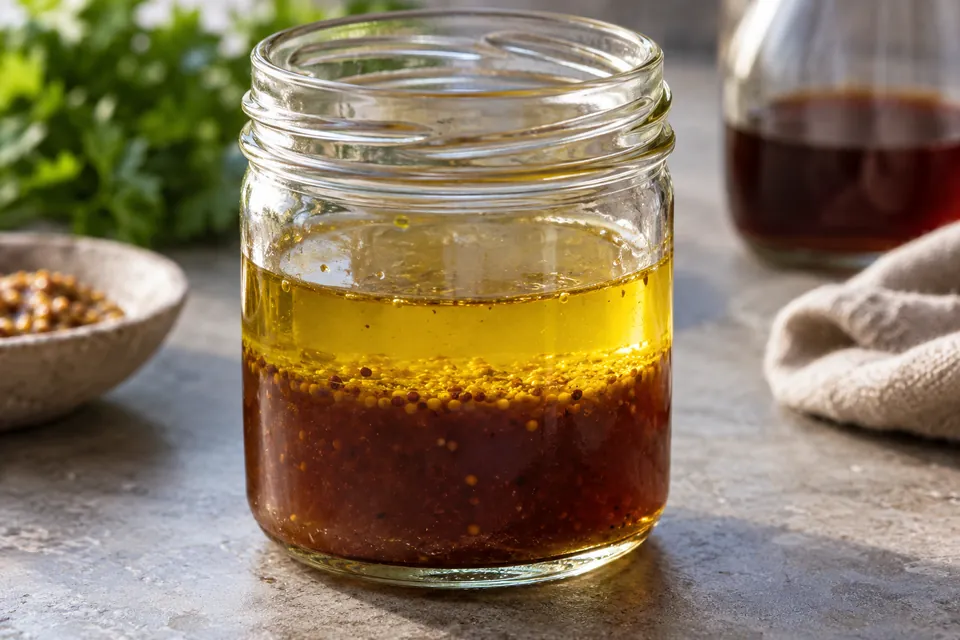
The dressing looks mixed, then develops layers. First decide whether this actually interrupts the job. A shaken oil-and-vinegar Vinaigrette may work well when mixed just before pouring. CIA’s vinaigrette teaching material distinguishes that temporary mixture from a dressing with an emulsifying ingredient.
The practical problem is uneven delivery: an oily first pour and a sharper watery pour afterward. Permanent uniformity is not the goal of every dressing.
How to fix it
- Whisk again, or shake in a securely closed container.
- Check one pour on the food. If it coats reasonably evenly long enough for this serving, use it without chasing a more elaborate rescue.
- If oil is collecting while you are still adding it, pause additions. Whisk the existing mixture before deciding whether to continue.
- If you want a mustard-assisted dressing and its flavor suits the dish, mix in a small amount of prepared Dijon, then re-whisk and taste. The result is not guaranteed to stay mixed indefinitely.
- If it still layers too quickly for your intended use, make a smaller fresh batch using the gradual-addition method. Keep the original only if remixing makes it useful for immediate dressing.
ICE’s lesson supports slow oil addition and Dijon as an emulsifying ingredient. Adding more oil merely because the dressing separates can create a different flavor balance without solving the mixing problem.
Worked example
A jar separates while you set out salad bowls. Shake it again and dress one bowl. If the mixture distributes evenly, repeat the shake for subsequent pours.
If you wanted a more consistent mixture for tossing the whole salad, use the mustard-assisted method next time. There is no fixed number of minutes that this guide promises for either result.
Why this happens
Mixing disperses droplets rather than making oil dissolve into vinegar. Harvard’s oil-and-vinegar example shows why layers can return after shaking. Emulsions explains the mechanism.
A thick appearance does not establish lasting stability. Sauce Body keeps those questions separate.
How to prevent it next time
Choose a temporary or mustard-assisted method deliberately. Add oil gradually when whisking, use enough bowl space to work the mixture, and taste on the food; Kenji López-Alt’s method demonstrates those decisions.
Use prepared Mustard, not an assumed equal spoonful of seed or dry powder. Mustard changes flavor as well as the mixture’s behavior.
Related failures
Sauce Is Too Thick concerns a cohesive mixture that will not pour as wanted. It is not the same observation as two layers.
See also
The vinaigrette guide gives the full method. This diagnosis does not cover mayonnaise, egg sauces, dairy dressings, or long-term storage.