In the kitchen
For the mustard-assisted vinaigrette method, mix a little prepared Dijon with vinegar before adding oil; taste before increasing the mustard.
Look, listen, check
- The label identifies a prepared condiment rather than seed or powder.
- More mustard changes flavor and seasoning as well as mixing behavior.
- A mustard-assisted dressing may still need remixing.
In this guide
What mustard is
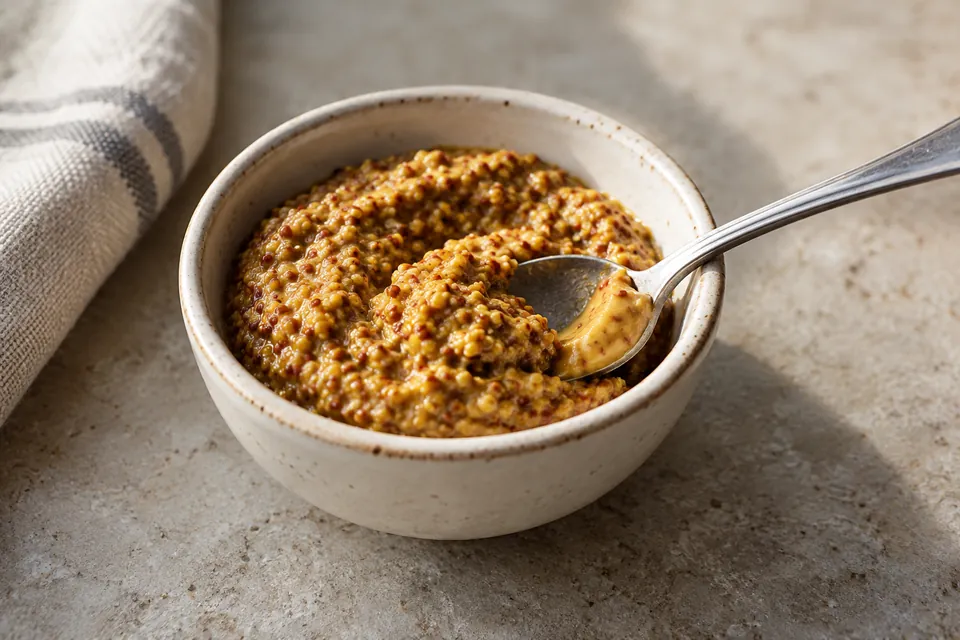
“Mustard” can mean seeds, ground dry powder, or a prepared condiment. For the method in Vinaigrette, it means prepared Dijon: a paste mixed into the vinegar before oil is added.
That distinction matters. French’s published Dijon ingredients include water, vinegar, mustard seed, and salt. The label is an example of a prepared product, not evidence that every mustard jar has identical ingredients.
How to buy and store
Choose a prepared mustard whose flavor suits the dressing. Read the label for the actual ingredients, including sweeteners or other seasonings you need to account for.
Keep the lid closed and follow the jar’s guidance after opening. The cited manufacturer’s instructions recommend refrigeration for best flavor. That quality instruction does not establish a universal safety shelf life for homemade mustard or a dressing made with it.
Functional role in techniques
Prepared Dijon supplies flavor and can help oil remain dispersed in a vinaigrette. ICE’s lesson identifies it as the emulsifying ingredient in its dressing. Mix it into the watery base before gradually whisking in the oil.
UCLA’s Science and Food explanation discusses emulsifying components associated with mustard seed. This supports a role in mixing, not a guarantee that any jar or amount will hold any oil ratio indefinitely.
More is not automatically better. A large addition may turn a lightly flavored dressing into a distinctly mustardy one. Judge the result on the food as well as in the bowl.
Worked choice
You like a simple oil-and-vinegar dressing but want it to coat more evenly while tossing. Try a small serving batch with a little prepared Dijon.
If that flavor does not suit the dish, a temporary vinaigrette mixed before pouring is still an option. Mustard is useful, not compulsory.
Common failures and diagnostics
Dressing Separates Too Quickly asks whether the separation interrupts use. Oil collecting during additions calls for a method check, not an automatic larger spoonful of mustard.
A thick dressing can still separate later. Emulsions and Sauce Body distinguish stability from flow.
Substitutions
Another prepared mustard changes flavor and may change texture; try a small amount rather than assume identical performance. Seed and dry powder need a recipe designed for them, with its liquid and seasoning decisions, rather than an assumed equal-spoon substitution.
Notes on safety
These guides do not use mustard to validate food preservation. Follow the handling needs of the complete dish; a mixed appearance and a sharp taste do not establish storage safety.