In the kitchen
Mix vinegar and optional prepared mustard first; whisk in oil gradually, then taste on the food you intend to dress.
Look, listen, check
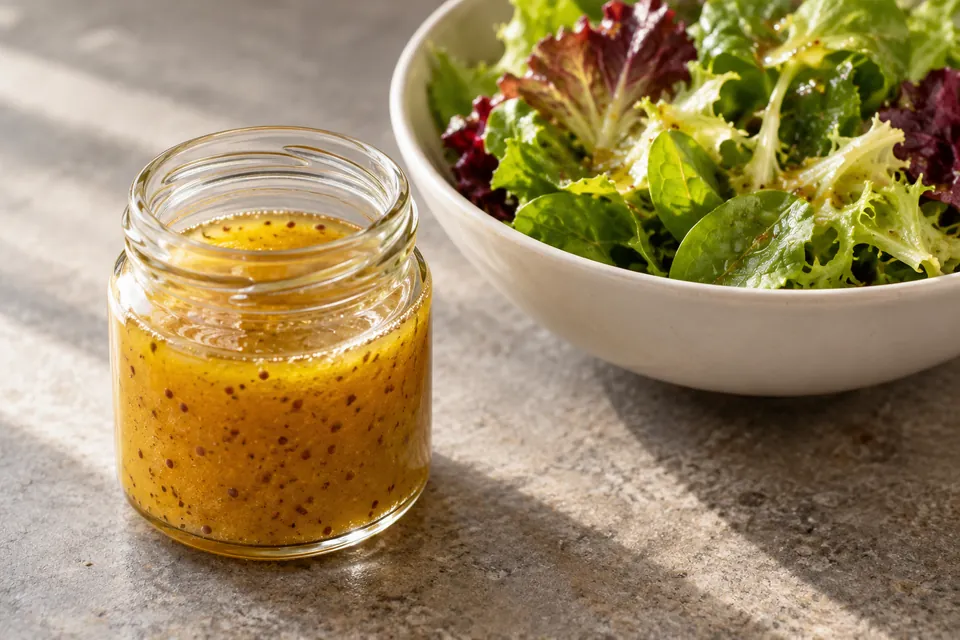
- An even-looking mixture coats the food without a separate puddle of oil.
- A simple oil-and-vinegar dressing may separate between uses.
- A mustard-assisted dressing can still need another shake.
In this guide
Start here
Decide how the dressing needs to behave. If you will mix and pour immediately, a simple shaken vinaigrette may be enough. If you want more even coating while tossing a salad, prepared Mustard is one useful option. CIA’s teaching material distinguishes temporary vinaigrette from a version with an emulsifying ingredient; separation alone is not proof that you failed.
Use an oil and vinegar whose flavor you like. Choose amounts by tasting the dressing with the food, rather than treating one ratio as compulsory.
Method
- Put the vinegar in a bowl with room to whisk. Add a small amount of prepared Dijon mustard if you want it, and mix.
- Whisk while adding the Cooking Oil in a thin stream. Pause additions if oil collects on top; work the existing mixture before adding more.
- Check whether the dressing looks reasonably even and pours as you want. It need not resemble mayonnaise.
- Taste a little on a leaf or piece of the food. Adjust seasoning and the oil-to-vinegar balance in small increments, mixing again after each change.
- Toss with a modest amount, taste, and add more only if needed. Mix the remaining dressing again before the next pour.
ICE’s vinaigrette lesson demonstrates slow oil addition while whisking and identifies Dijon as an emulsifying ingredient. For a quick temporary dressing, a securely closed jar and a shake are another option.
Worked example
For a small salad, start with 1 tablespoon wine vinegar and 1/2 teaspoon prepared Dijon. Whisk in 2 tablespoons oil, then taste on a leaf. If that is sharper than you want, add part or all of a third tablespoon of oil gradually. Stop when the dressed leaf tastes balanced to you.
This is an illustrative starting batch, not a tested Fondwork formula or a stability guarantee. Kenji López-Alt’s guide uses tasting the dressed greens as the final check.
What’s actually happening
Whisking distributes droplets of oil through the watery liquid. Emulsions explains why mixing can be temporary and why an emulsifying ingredient helps. Stronger flavor, greater thickness, and longer stability are separate goals.
When to use it
Dress salads, cooked vegetables, or grains just before eating. Make this serving batch with clean utensils; government handling guidance separates ready-to-eat food from raw meat and its utensils. This guide does not establish a storage life for every dressing variation.
Sensory cues for done
Look for reasonably even coating and taste on the food. A visible oil layer between uses may simply mean another shake is needed.
Common failure modes
Dressing Separates Too Quickly asks whether remixing meets the intended use. Sauce Is Too Thick helps distinguish a cohesive but reluctant pour from separated oil.
Equipment
Use a bowl and whisk, or a tightly closing jar for shaking. No blender is required.
Related techniques
A cold vinaigrette and Finish a Sauce with Butter both involve dispersed fat, but their ingredients and temperature decisions differ.
Example applications
Try a small amount over cooked vegetables alongside browned Mushrooms. The dressing supplies acidity without requiring a pan sauce.